
Table of Contents
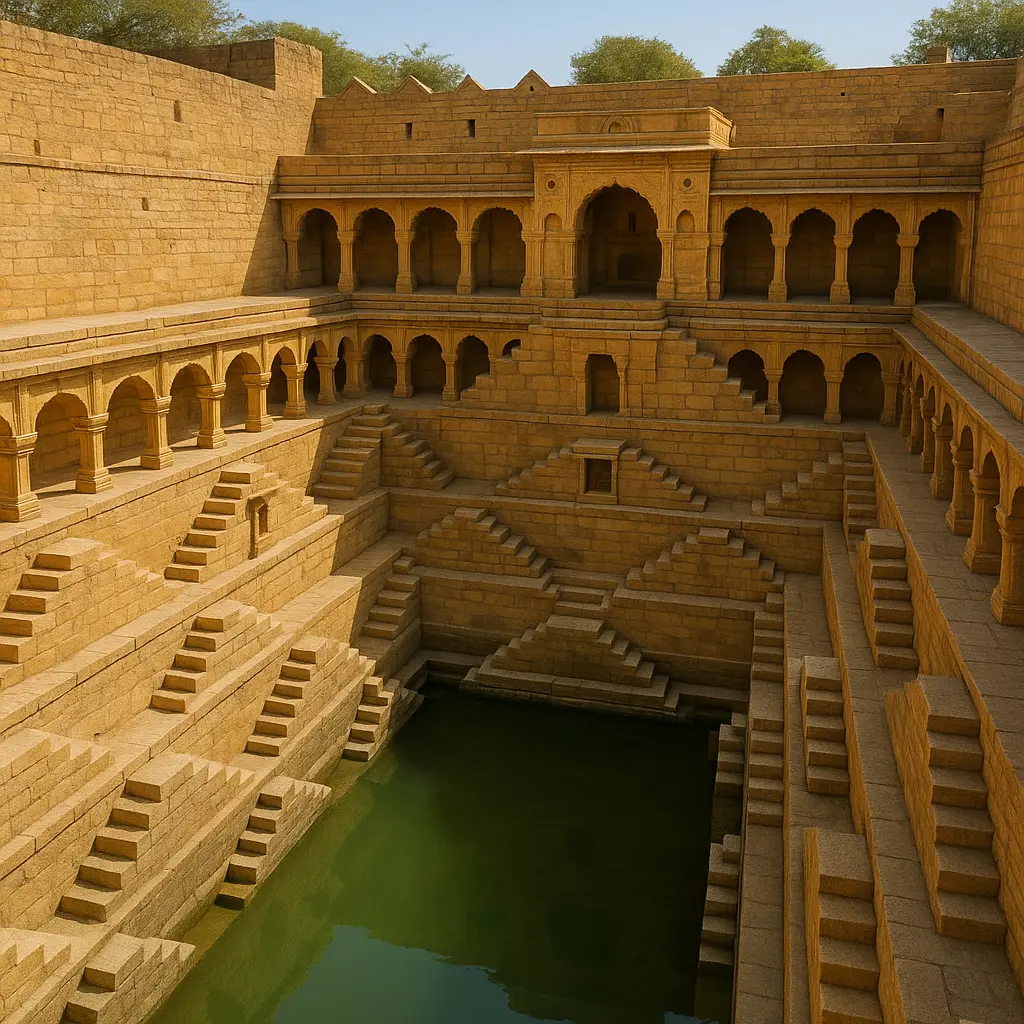
Hidden Stepwells of Jaisalmer
When people plan a trip to Jaisalmer, they usually think about the golden fort, desert safari, or camping under the stars. But very few know about the Hidden Stepwells of Jaisalmer—ancient water structures that quietly hold stories of the past. These stepwells were once the lifeline of the desert city, providing water and serving as social gathering spots. In this blog, we will cover the most famous stepwells of Jaisalmer, their history, and why they are worth adding to your travel list.
What are Stepwells?
Stepwells, also called baoris or baolis, are wells with steps leading down to the water. In the desert, where water was scarce, they played a vital role in daily life. People came here to collect water, perform rituals, and even rest during the heat of the day. They were more than practical structures—they were part of the city’s culture and community.
Read Our New Guide :- Why Travelers Visit Kuldhara
Gopa Chowk Stepwell
Tucked near the entrance of Jaisalmer Fort, the Gopa Chowk Stepwell is a hidden beauty. Recently restored, it glows with golden sandstone and neat steps leading down to the water. Away from the busy fort lanes, it offers a calm and peaceful stop for those who wish to see Jaisalmer beyond the usual tourist spots.
Shree Nathji ki Baori
This stepwell, dedicated to Shree Nathji, is a blend of faith and function. Locals still visit for prayers and small rituals, keeping the spiritual side of the structure alive. Its sandstone design is simple yet charming, and the atmosphere feels both historic and sacred.
Bada Bagh Stepwell
Close to the royal cenotaphs of Bada Bagh lies another stepwell that once served travelers and locals visiting the site. It may not be grand in size, but its location makes it unique. Exploring the cenotaphs at sunset followed by a quiet walk to this stepwell feels like a journey back in time.
The Architecture of Stepwells
The Hidden Stepwells of Jaisalmer are built from golden sandstone, blending beautifully with the desert landscape. Their symmetrical steps, arches, and patterns show how even a simple water tank could be designed with elegance. For architecture lovers and photographers, these stepwells offer endless inspiration.
Why You Should Visit These Stepwells
Visiting these stepwells gives you a chance to escape the crowds and enjoy a quieter side of Jaisalmer. They are perfect for photography, storytelling, and understanding how the desert city managed water so wisely. Unlike the busy fort and markets, stepwells let you slow down and truly connect with Jaisalmer’s past.
Tips for Travelers
The best time to see these stepwells is during the morning or evening when the light is soft and the atmosphere calm. Many of them are near famous attractions like Jaisalmer Fort and Bada Bagh, so you can easily add them to your sightseeing plan. Carry water with you, as these areas are often quiet, and remember to respect the fact that some stepwells are still used for rituals.
Conclusion
The Hidden Stepwells of Jaisalmer are not just old water tanks—they are silent storytellers of desert life. They remind us of the city’s clever water systems, its artistic touch, and its community spirit. On your next trip to Jaisalmer, don’t just stop at the fort or enjoy the desert safari. Take a few steps down into these forgotten wells and you’ll discover a secret part of Jaisalmer’s golden history.